
 Image 1 of 1
What’s inside:
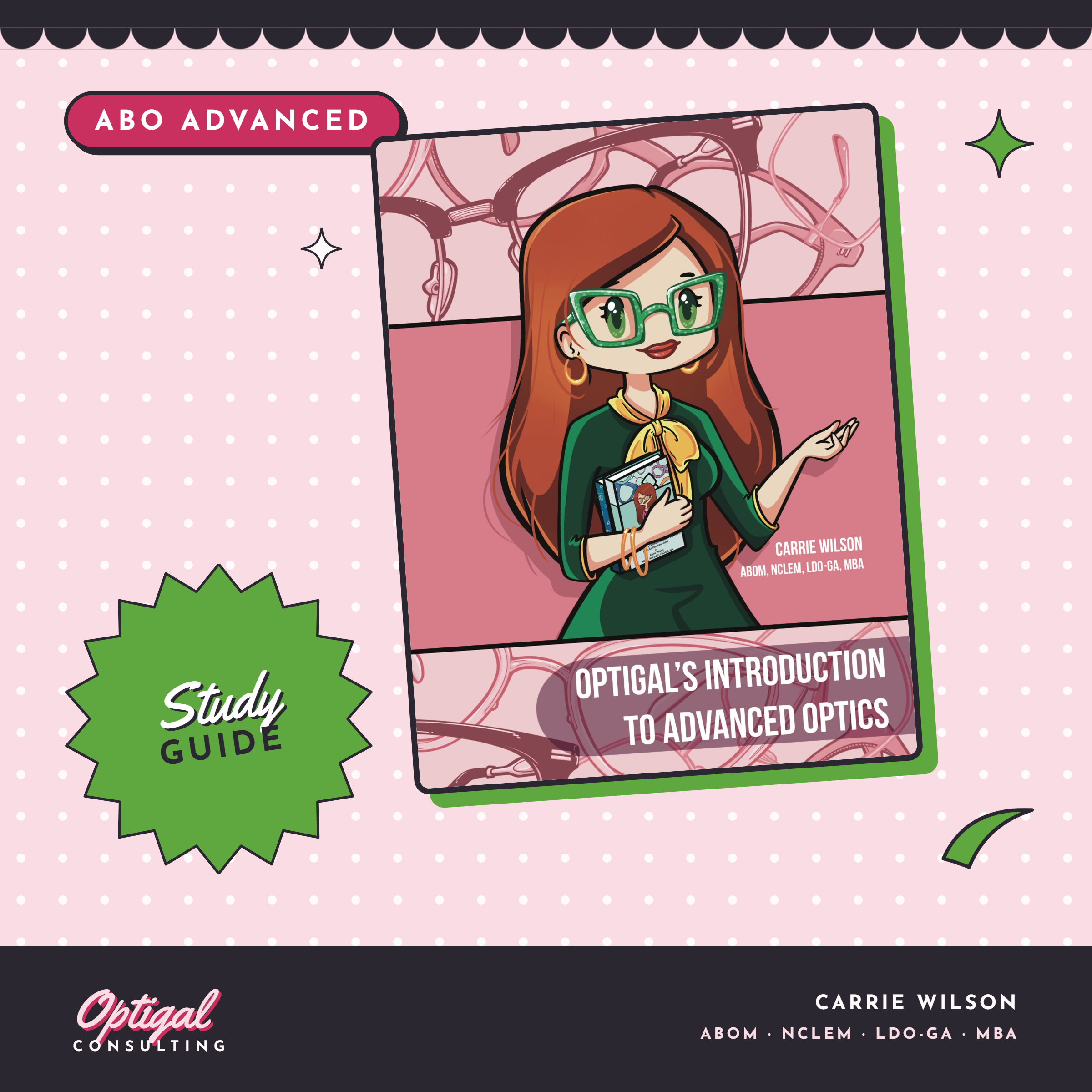
Nine chapters and more than 280 pages covering:
Anatomy and Physiology: ocular structures, refractive errors, systemic conditions, refractive surgery, and how common medications affect vision
The Visual Assessment: pre-testing, binocular vision, cycloplegic refraction, retinoscopy, the subjective refraction, and charting
Optical Mathematics: power, prism, decentration, blank size, magnification, and thickness formulas, including Prentice’s Rule, Snell’s Law, and Vogel’s Formula
Ophthalmic Optics and Design: vergence, prism, aberrations, specialty lens designs, and low vision devices
Spectacle Design: creating value, presenting options, lens materials, coatings and filters, patient measurements, and specialty eyewear
Adjustments and Tools: frame fit and alignment, hand tools, and the lens clock
Manufacturing and Standards: lens manufacturing and finishing, lab equipment, lensometry, progressive lens verification, ANSI Z80.1 and Z87.1, and FDA drop-ball testing
Regulations: regulatory agencies, professional organizations, the Eyeglass Rule, the Contact Lens Consumers Act, HIPAA, and licensing states
Bonus resources: practice questions after every chapter, full answer keys, and the ABO Advanced test domains
Table of Contents
Chapter 1: Anatomy of the Eye
Extraocular Structures · The Tunics of the Eye · The Visual Pathway · The Chambers of the EyeChapter 2: Physiology and Abnormal Physiology
Emmetropia and Ametropia · Presbyopia · Binocular Refraction · Abnormal Physiology · Conditions and Systemic Conditions · Surgical Procedures · Common Pharmaceuticals and Their ImpactChapter 3: The Visual Assessment
Pre-Assessment · Pre-Testing and Supplemental Testing · Binocular Vision Testing · Visual Acuity and Accommodation · Refractive Medications and the Cycloplegic Refraction · Retinoscopy: The Objective Refraction · “Better or Worse”: The Subjective Refraction · ChartingChapter 4: Optical Mathematics
Metric and US Imperial Refresher · Power Formulas · Prism Formulas · Decentration and Blank Size Formulas · Angles and Index · Magnification Formulas · Sagittal and Thickness · Cross CylinderChapter 5: Ophthalmic Optics and Design
The Movement of Light · The Components of a Lens · Aberrations · Specialty Ophthalmic Lens Designs · Telescopes, Binoculars, and Low Vision DevicesChapter 6: Spectacle Design
Assessing the Old Pair · Patient History · Creating Value · Presenting Options · Product Knowledge · Patient Measurements · Specialty EyewearChapter 7: Spectacle Adjustment and Handheld Tools
Frame Fit · Adjusting the Frame for the Patient · Frame Front Alignment · Temples · Ensuring Proper Fit · Patient Care Instructions · Common Hand Tools · The Lens ClockChapter 8: Ophthalmic Manufacturing and Standards
Lens Blank Manufacturing · Digital Surfacing and Free-Form Lenses · In-House Lens Finishing · Small Lab Equipment · The Lensometer · Prescription Verification · Progressive Lens Verification · ANSI Z80.1 · ANSI Z87.1 · FDA Drop-Ball TestingChapter 9: Government Regulations and Professional Organizations
Regulatory Agencies · Ophthalmic Professions and Duties · Professional Organizations · The Eyeglass Rule · Fairness to Contact Lens Consumers Act · HIPAA · Licensing StatesBonus Resources
Practice Questions for Every Chapter · Answer Keys · ABO Advanced Test Domains